
Why babies need skin to skin comes down to early regulation, emotional safety and the natural closeness that supports bonding and development in the first days, weeks and months.
By Tiny Hands Big Adventures – December 2025
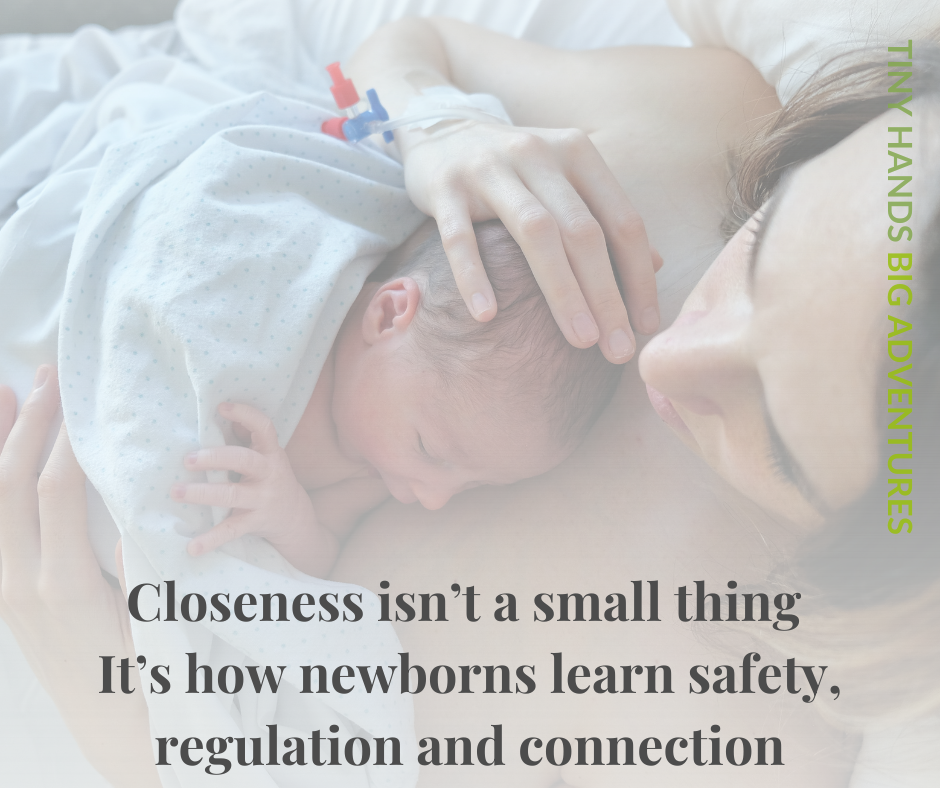
From the second a baby is born, they experience the world as a rush of new sensations… brighter, colder, louder and far less contained than the womb. Skin to skin gives them a familiar bridge into this new reality. Being held against a caregiver’s chest offers warmth, rhythmic movement and the soft pressure their body instinctively seeks. It isn’t an optional extra or a nice idea. Across cultures and throughout history, babies have been held this way because it meets the most basic needs of a newborn… safety, closeness and regulation. Their tiny bodies recognise it long before adults understand its importance.
Newborns arrive in the world with systems that work, but not independently. They can breathe, feed and maintain temperature, but all of these can be challenging. Their nervous system is still forming the patterns it needs for long term stability. Skin to skin supports these early adjustments by giving the baby access to an already regulated body. A caregiver’s heartbeat, warmth and breathing rhythm offer cues that help the baby organise their own responses. It is a form of borrowed regulation. The adult provides the steady internal environment that the baby cannot yet create alone. Without this external support, newborns can become overwhelmed much more easily. Skin to skin gives them a safe base from which to handle the intensity of early life.
Although babies cannot understand language, they have a deep capacity for emotional communication. Touch, warmth and proximity are the ways a newborn understands care. When skin to skin happens regularly, the baby begins building an internal sense that the world is consistent and supportive. This early emotional safety is not a luxury. It becomes the foundation for how babies learn to handle stress, seek comfort and connect with others as they grow. In the stillness of skin to skin, the baby receives a clear and repeated message… you are cared for, you are understood, and comfort is available. These early experiences shape the emotional patterns that will guide them into childhood and beyond.
Feeding requires coordination… rooting, sucking, swallowing, breathing and staying regulated enough to manage it all. Skin to skin provides the conditions that make this easier. Babies feeding from a place of calm tend to latch more effectively, stay focused for longer and feed in a more relaxed pattern. For breastfed babies, skin to skin promotes oxytocin release in the birthing parent, which supports milk flow and helps reduce tension around feeds. For bottle fed babies, the closeness helps maintain the same sense of comfort and connection, allowing feeding to become an emotional exchange rather than simply a physical task. Feeding is not just nourishment. It is relational. Skin to skin creates the emotional space for that relationship to grow.
Newborn sleep is unpredictable and fragmented. Their sleep cycles are short and they spend more time in lighter sleep states. Skin to skin helps guide them into deeper rest by lowering cortisol, softening muscular tension and giving them familiar sensory cues. The warmth of the adult’s body helps maintain their temperature, and the gentle pressure of being held offers a womb like sense of security. This combination often leads to longer, more settled naps and fewer abrupt transitions between states. Sleep is an essential part of early development, and skin to skin gently supports the baby’s ability to enter and stay in restorative rest.
Babies quickly learn the differences between caregivers. Each person offers their own rhythm, voice, scent and emotional presence. When partners provide skin to skin, they create another layer of safety for the baby. The baby learns that comfort comes from multiple people, that the world is stable even when one caregiver steps away and that relationships can feel different but equally safe. Partners often notice how deeply babies relax on their chest. The physiological benefits… reduced stress, improved regulation, increased oxytocin… are just as strong. Skin to skin also gives partners a practical, embodied role in early care, helping them feel more connected and confident.
Although the practice is often emphasised immediately after birth, its benefits extend well beyond the newborn period. Older babies still seek this kind of closeness when overwhelmed, overtired or overstimulated. Skin to skin becomes a way to reset the day… a pause button for babies who are navigating big developmental leaps or emotional shifts. During illness, teething, growth spurts or unsettled evenings, skin to skin helps bring the baby back to a calm, regulated place. Their nervous system continues to rely on the emotional cues of caregivers, and this steady closeness remains a deeply effective way to provide it.
Birth does not always follow the plan though… Emergency interventions, medical complications, NICU admissions or emotional overwhelm can all interrupt the moment many families imagined. But skin to skin does not have a critical window. The body remains responsive to touch long after birth, and babies remain receptive to closeness whenever it becomes available. Reintroducing skin to skin later still strengthens bonding, supports regulation and helps both baby and caregiver find a calmer rhythm together. Connection does not expire. It grows whenever it is given space.
Even though babies will not consciously remember the early months, their bodies remember the feelings associated with warm, safe touch. These experiences shape the foundations of emotional wellbeing, stress responses and early attachment. Skin to skin is more than a beautiful moment after birth. It is a biological, emotional and relational support system that helps newborns transition into the world with a sense of safety and connection.
Further Reading
• The benefits of skin to skin contact — Cleveland Clinic
https://my.clevelandclinic.org/health/treatments/12578-kangaroo-care
• Skin to skin contact and newborn stability — systematic review
https://pubmed.ncbi.nlm.nih.gov/37454580
• Kangaroo care for preterm infants — BMJ Global Health
https://gh.bmj.com/content/8/6/e010728
• UNICEF Baby Friendly — skin to skin guidance
• NHS — skin to skin with your newborn