
But Tiny Hands Big Adventures – January 2026
Independent play is something many parents hope will come more easily with time.
Sometimes it does. Other times it feels elusive… short bursts of play followed by frequent check-ins, requests for attention, or a child who seems happiest when an adult is nearby. It’s easy to wonder whether independent play is something that needs encouraging, practising, or waiting for.
In reality, independent play develops gradually and unevenly. It is shaped by a child’s age, temperament, environment and how settled they feel in that moment.
Independent play rarely looks like long stretches of quiet focus, especially in the early years. More often, it shows up in brief periods of engagement, repetition of the same actions, and a natural movement in and out of play. Children may play for a moment, check back in, and then return again. This is developmentally typical.
Independent play often builds in minutes before it builds in hours.
Play also changes from day to day. How tired a child is, what has happened earlier, whether routines have shifted or whether the environment feels familiar all influence how easily play flows. After busy days, disrupted routines or emotionally full experiences, children often need more support before play settles again. On quieter days, independent play may come more naturally. This variability is normal and doesn’t mean anything has been lost.
The environment plays a quiet but important role here. Spaces that feel familiar and predictable often support longer periods of play. Too many choices can overwhelm rather than inspire. Fewer, open-ended resources tend to invite deeper engagement because children don’t have to work out what something is “for”. Play materials that remain consistent over time also support independent play. Seeing the same items again and again allows children to return to ideas, build on them, and feel confident knowing what to expect. Play doesn’t need to be new to be meaningful.
Adult presence matters too. Children don’t always need adults to play with them, but they often play more easily when adults are nearby. This might look like an adult being in the same room, getting on with something ordinary, available but not directing. Knowing someone is close often gives children the confidence to stay with their play for longer.
Independent play doesn’t mean isolation. It means children feel settled enough to stay with their own ideas.
Some children do find independent play more challenging than others… They may move quickly between activities, struggle to settle, ask for frequent attention or become frustrated easily. This doesn’t mean they aren’t capable of independent play. Often, it means they are still developing the skills needed to stay with something when interest dips or emotions shift.
Play stamina builds slowly. It is influenced by age, emotional load and sensory needs. Short, frequent periods of independent play are just as valuable as longer ones.
Independent play is also shaped by the wider rhythm of their day. Children tend to play more easily when their basic needs are met… when they are rested enough, fed, and not rushing between activities. Predictable moments where nothing much is expected often create the space for play to emerge naturally.
Independent play rarely appears on demand. It shows up when there is room for it.
Across early childhood, independent play looks different. Babies play independently through looking, reaching, grasping and repeating movements, often for seconds at a time. Toddlers tend to play in short bursts, returning frequently to adults before heading back again. Preschoolers may begin to stay with play for longer, especially when play feels familiar and pressure-free.
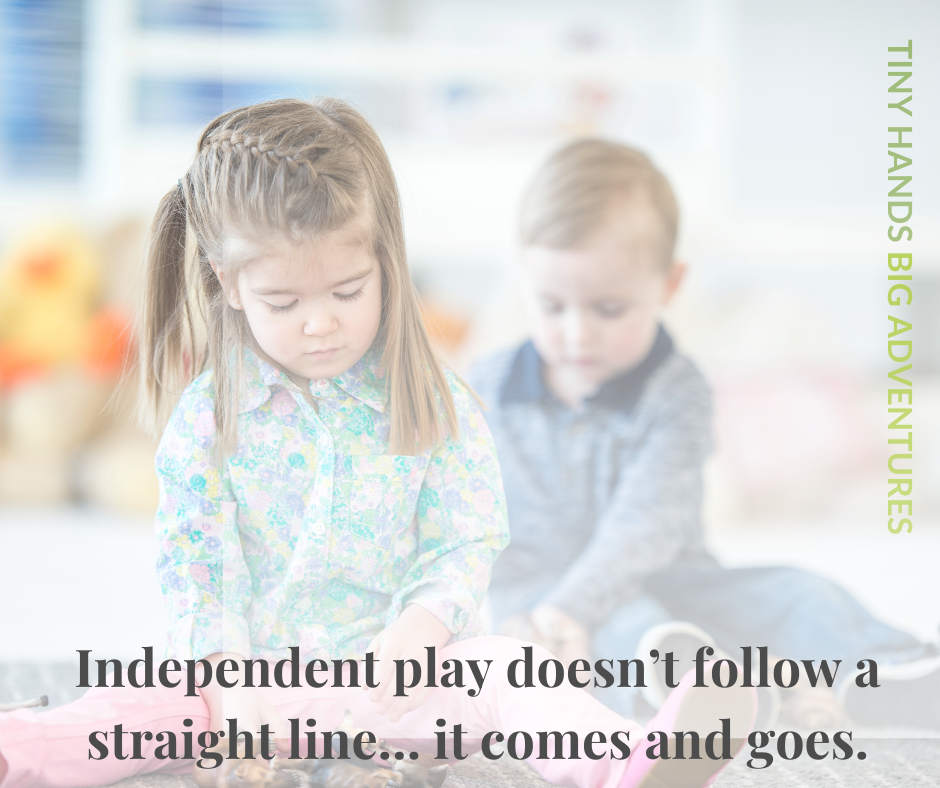
Independent play grows gradually and it doesn’t follow a straight line.
Trying to insist on independent play can sometimes have the opposite effect. If a child senses they are expected to play alone so adults can step away… play can quickly turn into restlessness or resistance. Independent play is more likely to develop when it feels optional rather than required.
Independent play doesn’t develop because children are encouraged to be independent. It develops because play feels safe, familiar and manageable. Small moments of settled play count. Short stretches matter. Returning again and again is part of the process.
Independent play is not a performance or a milestone... It is something children grow into, in their own time.
This blog reflects current early years understanding of play and development.
Further reading
Anna Freud Centre – Under fives wellbeing
https://www.annafreud.org/resources/under-fives-wellbeing
NHS – Baby and toddler play ideas (Start for Life)
https://www.nhs.uk/baby/babys-development/play-and-learning/baby-and-toddler-play-ideas
NHS – Playtime and activities for toddlers (Best Start in Life)
https://www.nhs.uk/best-start-in-life/toddler/activities-for-toddlers
Just One Norfolk – Benefits of play
https://www.justonenorfolk.nhs.uk/child-development-additional-needs/talk-and-play/benefits-of-play