
By Tiny Hands Big Adventures – November 2025
Talking to children about terminal illness and death is one of the hardest conversations many parents will ever face.
When a loved one is living with a serious illness, or when a death has occurred, parents are often left holding an impossible question:
How do I talk to my child about this?
There is rarely a perfect way to have these conversations. Parents worry about saying too much, saying too little, or saying the wrong thing altogether. They worry about causing fear, distress, or emotional harm.
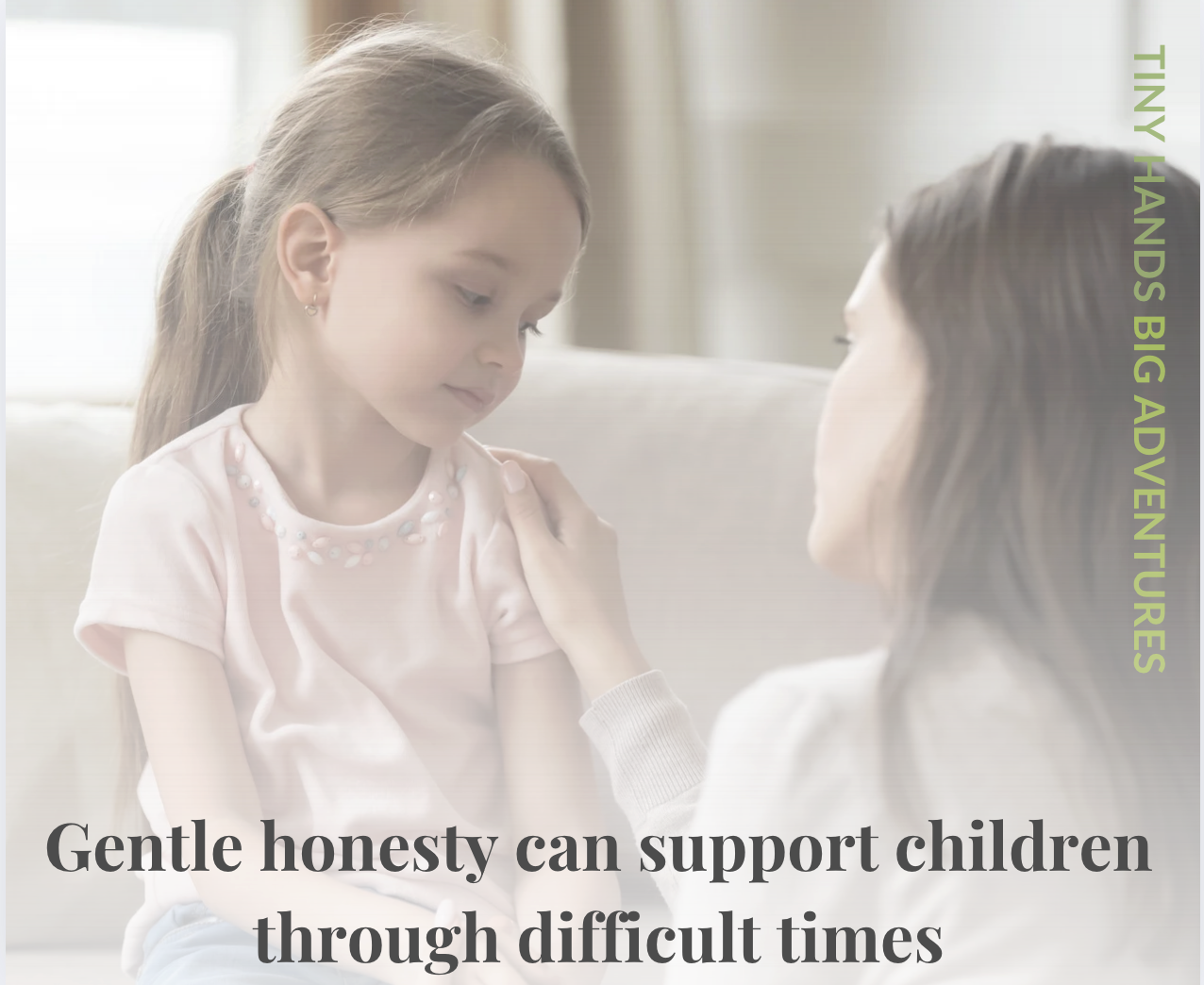
But children don’t need perfect words… They need honesty that feels safe, explanations that match their understanding, and adults who are willing to return to the conversation again and again.
If you’re worried right now
If you’re reading this because someone you love is seriously ill, or because your family has recently experienced a loss, you may already be carrying a lot.
It’s ok if you don’t feel ready for all the answers. It’s ok if you’re unsure what to say. And it’s ok if you’re finding this emotionally heavy.
You don’t need to get this “right” straight away. What helps children most is knowing that they can ask questions, that their feelings are allowed, and that the adults around them will keep coming back to the conversation when they’re ready.
If at any point this feels too much to hold on your own, support is available. You’ll find details of trusted UK organisations at the end of this blog… You don’t need to navigate this alone.
What we should remember is that children do not experience illness, death or grief in the same way adults do.
Their understanding develops gradually, and their emotional responses often come in waves. A child may ask a serious question one moment and return to play the next. They may seem unaffected for a time, then show strong feelings later.
This doesn’t mean they aren’t processing what’s happening. It means they are doing so in a way that fits their developmental stage.
Children’s grief is often intermittent rather than constant, expressed through behaviour as much as words, and revisited as understanding grows. There is no single “right” response, and no fixed timeline.
Talking about illness, including terminal illness
When someone is living with a serious or terminal illness, children are often aware that something is happening, even if they don’t yet have the language for it. They notice changes in routines, emotions, energy levels and conversations around them.
Using clear, simple language helps children feel less confused. Avoid euphemisms that can create misunderstanding. Instead of phrases like “very poorly” or “going away”, gently explain that the person has an illness, and that doctors are helping as much as they can.
If the illness is terminal, it’s okay to explain that this means the person will not get better and will die. Children generally cope better with this information when it is shared honestly, in small amounts, and revisited over time.
At the same time, it is important to help children understand that most illnesses are not terminal.
Many children worry that any illness leads to death, especially if someone they love has died after being ill.
Reassurance can sound like:
• “Most people who get ill get better.”
• “Doctors help people recover from lots of illnesses.”
• “Someone being ill does not usually mean they will die.”
Children also benefit from knowing they did not cause the illness, that it is not contagious, that they will continue to be cared for, and that getting ill does not automatically mean dying.
Honesty paired with reassurance helps children feel safer than silence or avoidance.
For some families, illness is the context through which children first begin to encounter the idea of death. How we explain what death means… and the words we choose, can shape how safe and understood children feel as they start to make sense of it.
Talking about death before it becomes personal
For many families, the first time death is discussed openly is when it suddenly affects them directly. When that happens, the conversation can feel overwhelming for everyone.
But death doesn’t always have to be introduced in the middle of crisis.
Children often encounter death in everyday ways long before it touches their own family. A pet may die. A friend may lose a grandparent. A classmate may talk about a funeral. These moments can offer gentle opportunities to talk about death in a way that feels contained and manageable… When adults respond calmly and honestly in these moments, children begin to learn that death is a part of life… sad and significant, but not something that must be avoided or hidden.
Simple explanations such as:
• “Their pet died, which means its body stopped working.”
• “They’re feeling sad because someone they love has died.”
• “It’s okay to ask questions or feel upset about that.”
help children build understanding gradually.
Children who have had opportunities to talk about death beforehand may sometimes find it easier to ask questions, express feelings and seek reassurance later on.
But if these conversations haven’t happened before, nothing has been damaged. Many families only begin talking about death when illness or loss happens, and that is completely ok. Children can begin to understand and process death at any point, when caring adults are willing to talk honestly, answer questions gently and return to the conversation over time… What matters is that these conversations stay honest without being overwhelming, calm rather than dramatic, and led by the child’s curiosity rather than adult agendas.
Choosing words to explain death
One of the hardest parts of talking to children about death is finding language that feels honest without being frightening.
Many adults instinctively soften the truth with phrases like “gone to sleep”, “passed away” or “lost”. But young children often take language literally, and these phrases can create confusion or fear… particularly around sleep, separation or everyday routines.
Child bereavement organisations recommend using clear, simple words, even though they can feel uncomfortable at first.
Helpful language often includes:
• “Died” or “has died”
• “Their body stopped working”
• “They can’t breathe, eat or feel pain anymore”
• “They won’t be coming back”
It is also important to be clear about what did not cause the death:
• “Nothing you did or thought caused this.”
• “It’s not something you can catch.”
• “Most people live for a long time.”
Children often need to hear these reassurances more than once. You don’t need to explain everything at once… small, truthful pieces of information are usually enough, with more added as questions arise… but they all develop emotionally at different paces, and our age references below is a guide rather than a rule.
Very young children experience loss through absence and change, often showing distress through behaviour rather than words. Preschool-aged children may see death as temporary and ask the same questions repeatedly. As children grow, they begin to understand permanence, may worry about others dying, and may experience deeper or more complex emotions.
At every stage, children benefit from being able to return to questions as their understanding grows.
Children often take emotional cues from the adults around them.
Seeing adults show sadness can be reassuring. It teaches children that feelings are allowed and that grief is not something to hide or fear. At the same time, children also need to know that they are safe and that adults can still care for them.
Support often looks like answering questions honestly, allowing all emotions, keeping routines where possible, and offering comfort without forcing conversation. Play, drawing and everyday activities are often how children express and process grief.
Children may ask very direct questions about death or what happens afterwards. It’s ok not to have all the answers. Phrases like “Different people believe different things” or “We don’t know for sure, but we do know they aren’t in pain now” can feel grounding without overwhelming.
It’s important to note that children may seem to cope well at first, then show renewed grief months or years later. This reflects growing understanding rather than delayed reaction. Keeping the conversation open over time matters far more than getting everything right once.
Supporting a child through terminal illness or death while managing your own grief is deeply challenging. Children benefit when adults have support too. Looking after yourself helps you stay emotionally available through something very hard.
What matters most is not the exact words you choose, it is that children feel included, informed at a level they can manage, and emotionally supported.
Grief is not something to fix or rush through…it is something to be carried… together.
This blog reflects current UK understanding of child development, bereavement and emotional wellbeing.
Further reading and support
If you would like further guidance or support, the following organisations offer trusted, specialist information for families:
• Winston’s Wish – UK charity supporting children and young people after the death of someone important
• Child Bereavement UK – Support and guidance for families facing bereavement or terminal illness
https://www.childbereavementuk.org
• Cruse Bereavement Support – Practical, compassionate guidance for adults supporting children through grief and loss
https://www.cruse.org.uk/about/blog/talking-to-children-about-grief/
• Hospice UK – Clear, sensitive guidance on talking to children about death and dying when someone is seriously ill
• Marie Curie – Gentle, evidence-based advice on helping children understand death and cope with grief
https://www.mariecurie.org.uk/information/grief/talking-to-children-about-death