
Tiny Hands Big Adventures – February 2026
You might have heard the term vagus nerve mentioned in conversations about regulation, trauma or wellbeing. It can sound very medical. Very technical, but the vagus nerve is something beautifully ordinary. It is part of the system that helps your baby feel safe, settle, connect and grow… And it begins shaping development from the very start.
What is the vagus nerve?
The vagus nerve is one of the main nerves in the body. In fact, it is the longest cranial nerve, meaning it begins in the brain and travels down through the face, throat, heart, lungs and digestive system.
Its job is to carry messages between the brain and the body.
It is part of the autonomic nervous system. That simply means the part of the nervous system that works automatically, without us having to think about it. Breathing. Heart rate. Digestion. All of that is managed here.
The vagus nerve plays a key role in the parasympathetic nervous system. That is the branch responsible for calming, resting and restoring the body after stress.
When people talk about “activating the vagus nerve”, they usually mean supporting this calming system to switch on.
You may already be familiar with the phrase fight or flight. This describes the body’s automatic response when something feels stressful, overwhelming or unsafe.
In fight or flight, the heart beats faster. Breathing becomes shallow. Muscles tighten. The body prepares to act or protect. This response is driven by the sympathetic nervous system, the branch responsible for alertness and survival.
The vagus nerve is closely involved in what happens next…
When the threat has passed, the vagus nerve helps switch on the parasympathetic nervous system. This is the calming branch that slows the heart, deepens breathing and tells the body it can rest.
In simple terms, fight or flight is the accelerator… The vagus nerve helps press the brake.
For babies and children, that brake system is still developing… and they rely on us to help activate it.
Why the vagus nerve matters in early development
Babies are born with an immature nervous system. They do not yet have the ability to regulate their emotions or settle themselves independently. Their calming systems, including the vagus nerve pathways, are still developing.
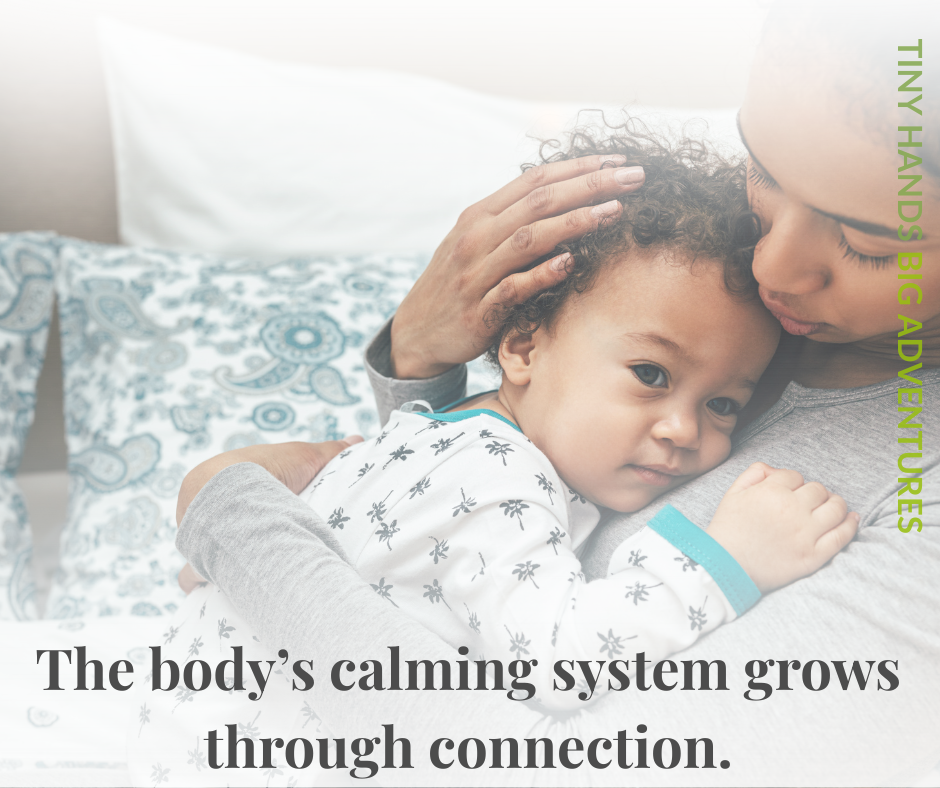
This means.. babies borrow regulation from us.
When a baby is held close, hears a familiar voice, feels warm skin to skin contact, or is soothed through gentle touch, signals travel through the vagus nerve that tell the body:
You are safe.
You can soften.
You can rest.
Over time, repeated experiences of being soothed strengthen these pathways.
This is how regulation is built…Not through instruction. Not through expectation…But through relationship.
The “social” vagus nerve and connection
You may come across the term ventral vagal system. This refers to the part of the vagus nerve associated with safety, connection and social engagement.
In plain language, this is the pathway that allows us to:
make eye contact
use facial expression
respond to tone of voice
feel calm in connection with others
For babies and children, this pathway develops through consistent, attuned interaction.
When you smile at your baby and they respond.
When your toddler looks to you for reassurance.
When you soften your voice during a big feeling.
These small moments are shaping their nervous system.
The vagus nerve links emotional safety with physical state. When a child feels connected, their heart rate steadies, breathing deepens and muscles relax… Connection and physiology are not separate. They are intertwined.
What happens when the vagus nerve is under strain
When a child experiences stress, illness, exhaustion or overwhelm, the calming branch of the vagus nerve may temporarily step back.
You might see:
shallow breathing
restlessness
clinginess
withdrawal
digestive upset
sleep disruption
big emotional reactions
Their body may still be in fight or flight, and the calming brake has not yet fully engaged.
The goal is not to avoid stress altogether. That would be impossible…. The goal is to help the body return to safety again and again.
That return strengthens vagal tone.
Vagal tone is a term used to describe how efficiently the vagus nerve can switch the body from stress into calm. Higher vagal tone is associated with better emotional regulation, resilience and physical wellbeing….
It is the body’s ability to settle.
How we can gently support our baby’s vagus nerve
The good news is that supporting the vagus nerve does not require complicated exercises.
It is built through ordinary, repeated experiences of safety.
For babies, this might include:
skin to skin contact
responsive feeding
gentle baby massage
rocking and rhythmic movement
slow, warm touch
calm eye contact
soothing voices
These experiences stimulate the vagus nerve and help regulate heart rate, breathing and digestion.
For toddlers and children, support might look like:
getting down to their level during big feelings
using a steady, predictable tone of voice
offering physical closeness
allowing rhythmic movement such as swinging or rocking
slowing transitions
protecting rest and sleep
Breathing together can also be powerful. Slow, steady breathing activates the parasympathetic system through the vagus nerve. Children often regulate more easily when breathing alongside a calm adult.
What is important is offering enough safety… often enough.
Why this matters long term
The vagus nerve influences more than emotional regulation.
It plays a role in:
immune function
digestion
heart rate variability
stress recovery
social engagement
sleep
When children experience repeated, supportive regulation early in life, their nervous system becomes more flexible. They are better able to move between excitement and calm, stress and recovery.
This flexibility is what underpins resilience.
It does not mean a child will not struggle… It means their body knows how to return.
It is worth mentioning that this doesn’t mean you need to keep your child calm at all times. You are not meant to prevent every stress. Challenges that may cause a little stress are healthy for a child’s development when supported emotionally.
You are simply offering a nervous system that can help guide theirs back to safety.
Every cuddle.
Every softened voice.
Every moment you slow down instead of escalate.
These are shaping the vagus nerve and through that, shaping emotional wellbeing, physical health and connection.
Development does not grow from pressure… it grows from safety felt in the body. Slowly. Repeatedly. In relationship.
Further reading
Understanding the Vagus Nerve and Its Role in Your Child’s Regulation — MoveAbout
Written by a paediatric occupational therapist, this explains the vagus nerve’s role in emotional regulation, calm and everyday behaviour in children in a practical, parent-friendly way.
https://www.moveabout.com.au/parent-information/vagus-nerve-child-regulation/
Vagal Activity, Early Growth and Emotional Development — PubMed Central (NIH)
Foundational research exploring how vagal activity is linked to early growth, emotional development and regulation.